The Ultimate Guide to Sound Healing: How Sound Baths Work and Why You Need One
Modern life can feel overwhelming. Between busy schedules, endless notifications, and daily responsibilities, many people struggle to find moments of true calm. This is where Sound Healing is gaining attention across Australia as a powerful wellness practice.
In this blog, you will discover what sound healing is, how a sound bath meditation works, why it has become so popular among yoga enthusiasts, and how it can support your mental, emotional, and physical wellbeing. Whether you are new to holistic wellness or looking to deepen your self care routine, this guide will help you understand why sound healing deserves a place in your life.
Table of Contents
What Is Sound Healing?
How Does a Sound Bath Meditation Work?
Why More Australians Are Turning to Sound Healing
The Science of Sound and Relaxation
How to Know When Your Mind and Body Are Begging for a Reset
A Unique Experience that Transcends Traditional Relaxation.
How to Get the Most from Your Sound Bath Experience
Experience the Benefits for Yourself
What is Sound Healing?
Sound healing is an ancient wellness technique that uses vibrations, resonant sounds and frequencies to promote relaxation and balance. Various instruments are used to produce relaxing sounds, including crystal singing bowls, Tibetan bowls, chimes, gongs and tuning forks to help soothe the nervous system.
Sound healing is not just listening to music for entertainment. It is purposeful. A session creates vibrations that induce a deeper level of relaxation that many people find difficult to achieve in everyday life.
Across the centuries, cultures across the world have used sound as a tool for healing, meditation, and spiritual connection. These practices are now present in contemporary wellness spaces, yoga studios and meditation communities across Australia.
How Does a Sound Bath Meditation Work?
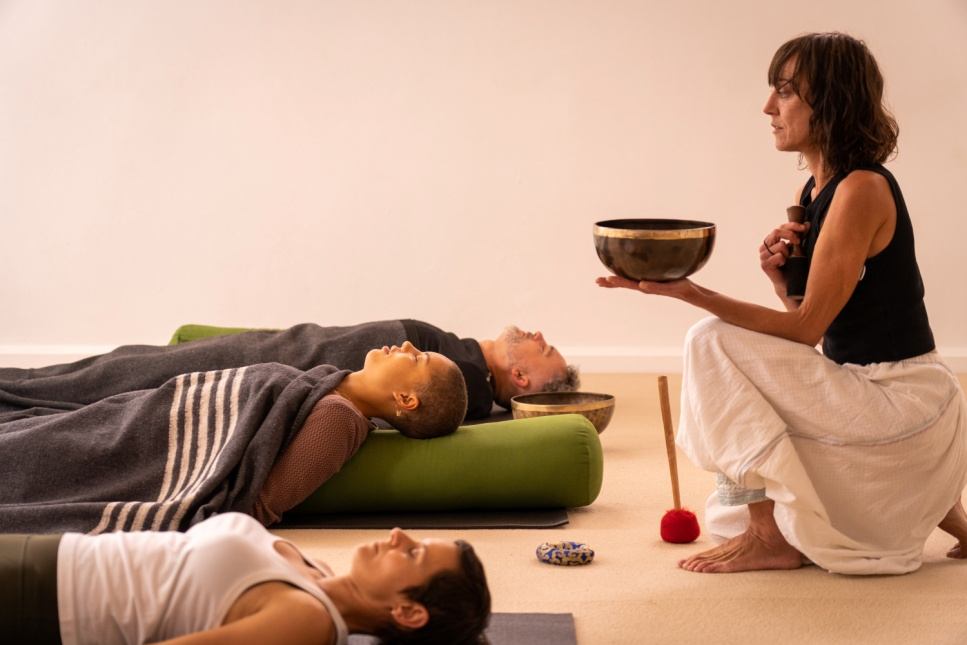
Sound bath meditation is one of the most popular forms of sound healing. In a session, participants usually lie comfortably on a yoga mat while a practitioner plays a variety of sound healing instruments. It requires no physical effort and can be done by people of all ages and fitness levels. As the sounds fill the room, the mind naturally begins to slow down. Many people describe the experience as very calming, almost like being in a dream state but awake. For instance, an individual experiencing a stressful work week might discover that a sound bath helps to quiet racing thoughts and cultivates a sense of mental clarity that can be difficult to achieve through traditional relaxation techniques alone.
Why More Australians Are Turning to Sound Healing
Wellness trends may come and go, but Sound Healing has always been popular because it provides what many people are seeking: stillness. Regular sound healing sessions often help people:
· Lessen stress and anxiety.
· Better sleep quality
· Increase awareness
· Support emotional health
· Promote deeper relaxation.
· Strengthen the mind-body connection
For those who practise yoga, sound healing can be a wonderful accompaniment to movement-based practice. It gives you a chance to stop, reflect and recharge on a deeper level.
The Science of Sound and Relaxation
Sound healing is an ancient practice, but today’s researchers are still studying how sound affects the brain and body. Certain frequencies and rhythms can produce brainwave patterns that are conducive to relaxation and meditation. When the body comes out of a constant stress response, it may be easier to rest, recover and focus. This means that a sound bath meditation is much more than just listening to beautiful sounds. It’s about creating an environment that helps the nervous system move towards a calmer and more balanced state. Everyone’s experience is different, but many participants say they leave a session feeling refreshed, lighter and more grounded.
How to Know When Your Mind and Body Are Begging for a Reset
Sometimes we get so used to stress that we forget what it feels like to really relax. You may benefit from sound healing if you experience any of the following on a regular basis:
· Mental fatigue
· Difficult to turn off
· Low quality of sleep
· Feeling overwhelmed
· Exhaustion of emotions
· Busy all the time and with no time to recover
Often, these signs are a call to carve out space for rest and self-care. This is precisely what sound healing provides in a gentle and supportive way.
A Unique Experience that Transcends Traditional Relaxation
What makes sound healing so special is that no two sessions are the same. Guided meditation requires the mind to follow spoken instructions, whereas sound healing asks participants to simply receive the experience. No pressure to perform, to focus perfectly, to get a certain outcome. Many people like this method because it’s a breath of fresh air, has no expectations and the body naturally slips into a comfortable state. Mindfulness, vibration and intentional rest together create an experience that is both deeply personal and universally accessible.
How to Get the Most from Your Sound Bath Experience
If this is your first session, here are a few simple tips to make it a better experience:
· Be open to new ideas.
· Clothes have to be comfortable.
· Pre-hydration and rehydration
· Don’t rush right after
· Give yourself time to think about how you feel.
Remember, no two experiences are the same. Some people feel the relaxation immediately, and others see the benefits over time.
Experience the Benefits for Yourself
Sound healing provides a welcome opportunity to get back in touch with yourself in a world moving so fast. Whether you’re looking for stress relief, deeper relaxation, or a meaningful addition to your wellness routine, a sound bath meditation can offer a restorative experience that supports both mind and body. If you are ready to experience the transformative benefits of sound healing, consider trying a session at HUM Studio. Their welcoming environment and holistic approach make it easy to discover how sound, stillness and mindfulness can help you feel more balanced, grounded and renewed.
